CDL MicroForest
FIRST RESEARCH-DRIVEN REGENERATIVE TROPICAL MICROFOREST IN A RETAIL MALL WITHIN SINGAPORE’S HIGH-DENSITY CITY CENTRE

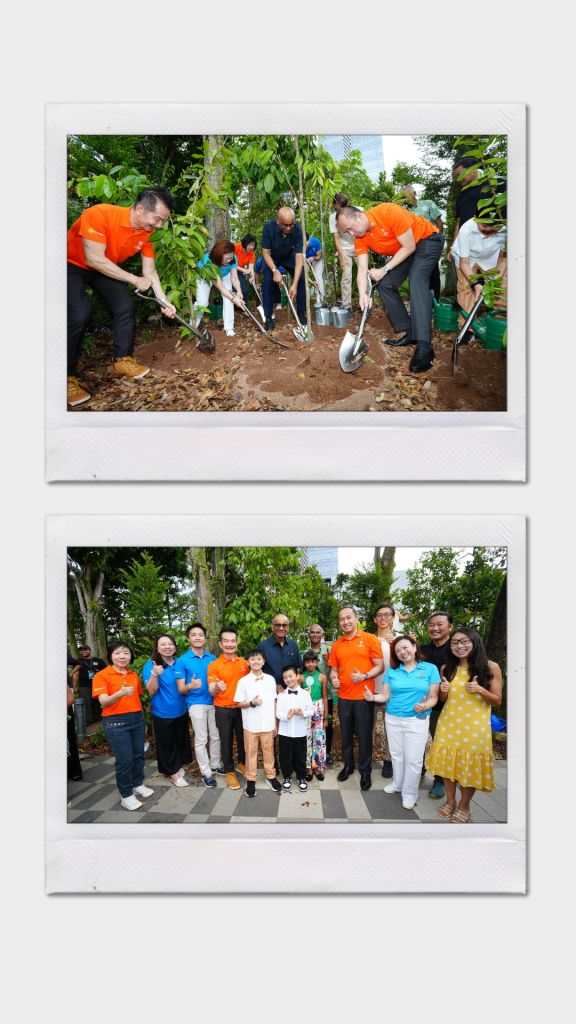
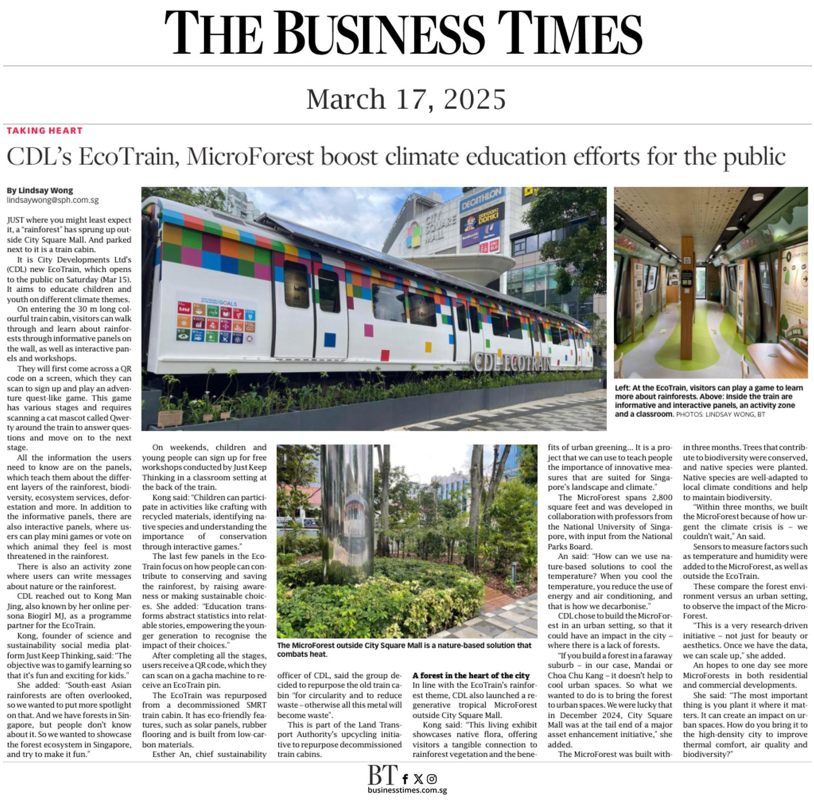
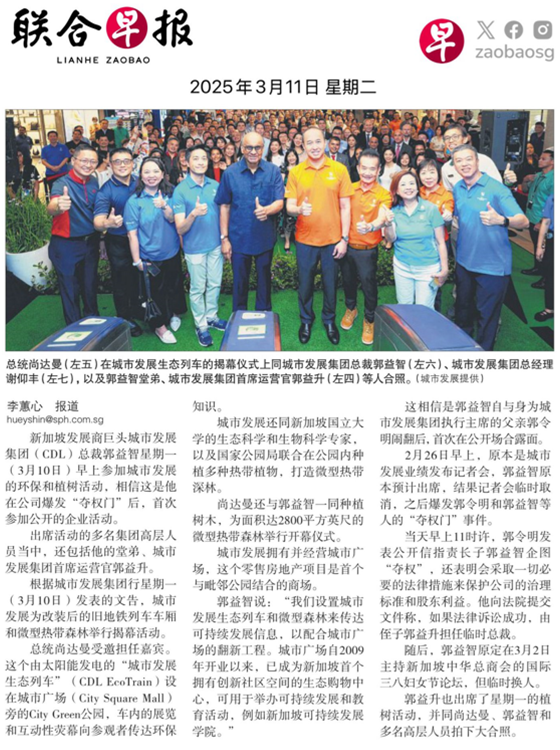
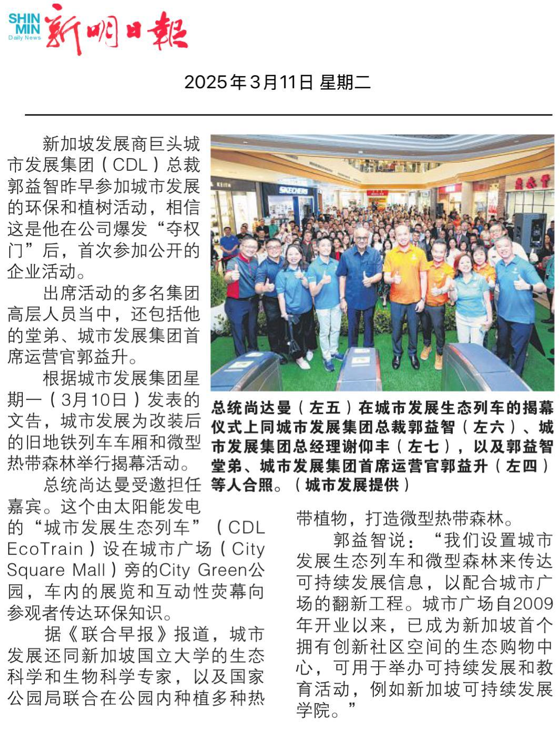
On 10 March 2025, the CDL MicroForest, alongside the CDL EcoTrain, was officially opened by Guest-of-Honour President Tharman Shanmugaratnam. He was joined by CDL’s senior management team, representatives from NUS, NParks, and JKT, as well as young eco-champions from CDL’s “We Love Our Planet” storytelling contest. The trees planted that day symbolise the 3P sectors’ shared responsibility to combat climate change and foster a greener tomorrow for our future. This collaborative effort exemplifies the power of partnerships in addressing environmental challenges.
Building on this spirit of cooperation, the CDL MicroForest emerged from a conversation between CDL’s Chief Sustainability Officer Esther An and Dr Adrian Loo, Director of NUS Centre for Nature-based Climate Solutions, at the conclusion of COP29 last year. Within three months, we created the first regenerative tropical microforest in a retail mall located in Singapore’s high-density city centre. This remarkable achievement reflects the collective commitment of our partners to address the climate emergency, particularly the pressing issue of urban heat island effect in Singapore.
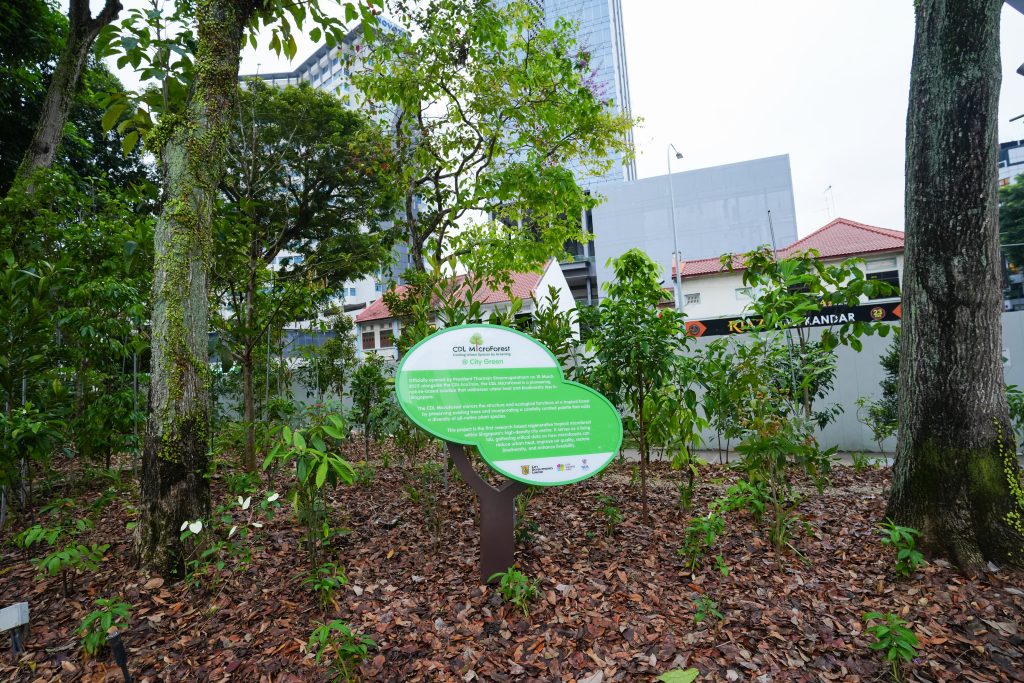
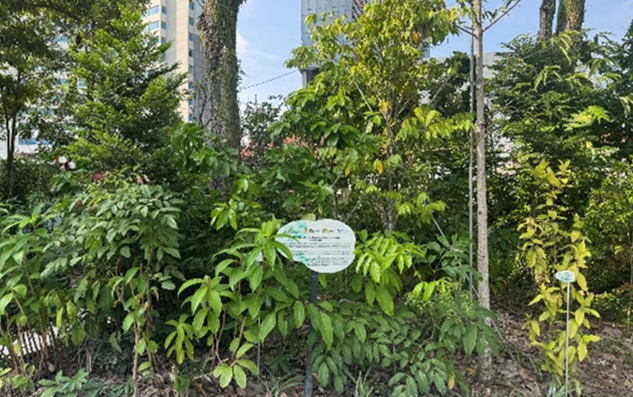
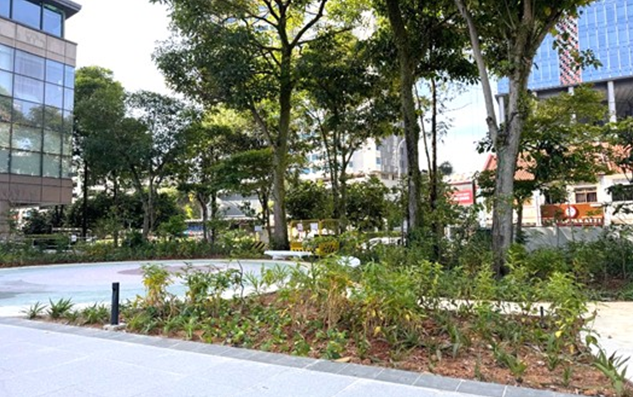
Located at City Green, the urban park adjacent to City Square Mall, this approximately 2,800 sq ft MicroForest was created to study how microforests can reduce urban temperatures, boost biodiversity and enhance ecological resilience. In 2024, Singapore experienced its fourth consecutive year of record-high temperatures within a decade, and one of its heaviest rainfall since 1980, highlighting issues like flash floods, infrastructure strain, soil instability and biodiversity due to urbanisation. In response, the CDL MicroForest was developed as a nature-based solution to mitigate urban heat and enhance biodiversity.
This initiative exemplifies a unique collaboration among the private sector and academia, uniting the expertise of CDL as the developer and manager of City Square Mall, and experts from National University of Singapore (NUS), who specialise in urban nature-based solutions.
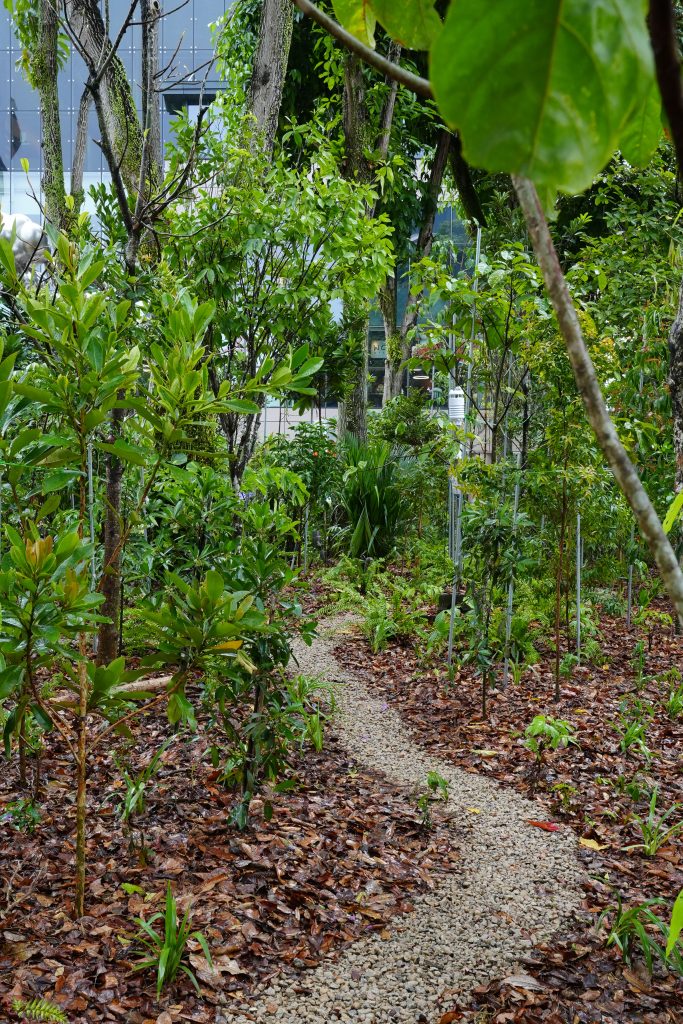
Guided by the principle of ‘cooling by greening’, this pilot serves as a living laboratory, collecting critical data on how regenerative microforests can reduce urban heat, improve air quality, restore biodiversity and enhance liveability. By incorporating a diverse range of plant species, the CDL MicroForest mimics a tropical forest, lowering temperatures and providing refuge for Singapore’s wildlife, including native pollinators and dispersers.
This project is a scalable model for integrating regenerative tropical microforests into dense urban areas, supporting ecological connectivity and reinforcing Singapore’s vision of a City in Nature. Through research and measurable outcomes, this collaboration aims to promote nature-based solutions, laying the groundwork for sustainable, ecologically resilient urban environments that will thrive for generations to come.
Benefits of a regenerative tropical microforest:
- Cooling by greening: Enhances thermal comfort by reducing urban heat through natural shade and evapotranspiration.
- Reduces flooding and helps with flash floods: Improves water absorption and drainage, reducing surface runoff and flood risks.
- Enhances biodiversity: Supports a rich variety of plant and animal species, creating a thriving ecosystem.
- Improves air quality: Absorbs pollutants and releases oxygen, contributing to cleaner air.
- Sequesters carbon: Captures and stores carbon dioxide, helping to mitigate climate change.
- Supports mental well-being: Provides green spaces that promote relaxation and reduce stress.
- Boosts soil health: Enhances soil fertility and prevents erosion through deep-rooted vegetation.
“Cooling through greening”: CDL MicroForest One Year On
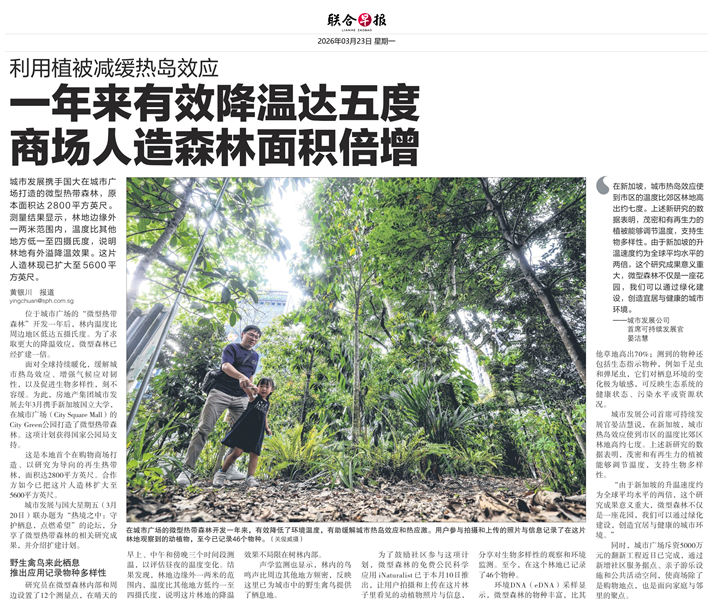
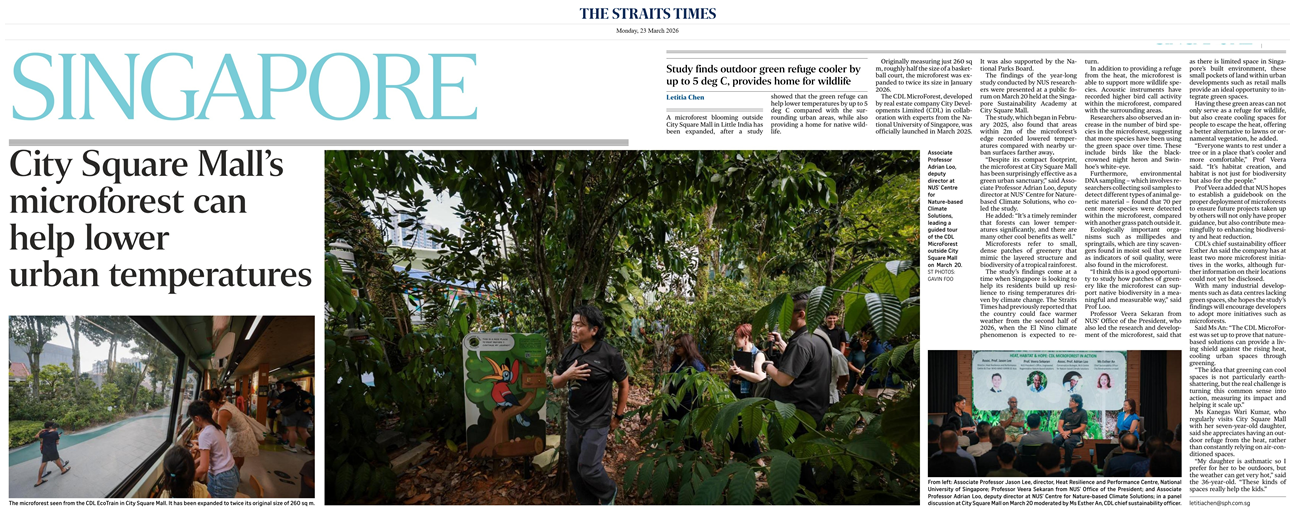
One year on, preliminary monitoring shows that temperatures within the CDL MicroForest can be up to 5°C cooler than surrounding and roadside areas, highlighting the cooling benefits of dense urban greenery to help mitigate local heat and improve microclimatic comfort through shade and evapotranspiration.
Early data also suggests that areas within 1 to 2 metres of the microforest edge have recorded some lowered temperatures of up to 1°C to 4°C compared to nearby urban surfaces further away. These early results suggest that even small patches of dense greenery may influence the surrounding microclimate, though continued monitoring and further research is needed to better understand the spatial extent of this effect.
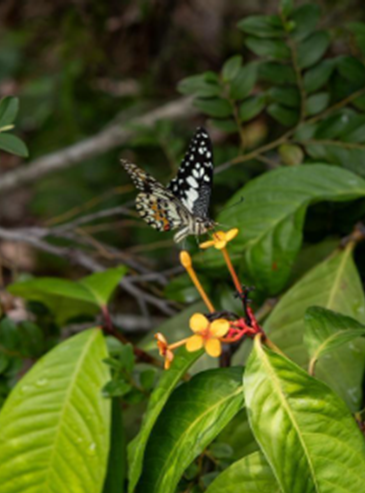
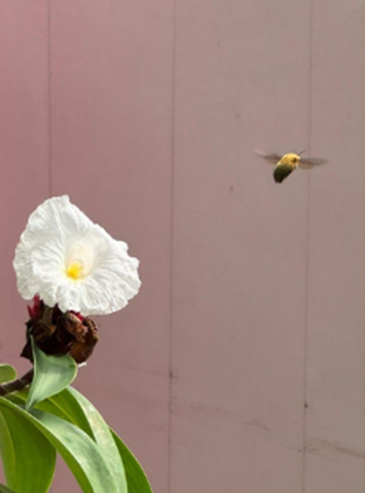
Acoustic observations recorded higher bird call activity within the microforest compared to surrounding areas, suggesting that the site may already be providing habitat and ecological value for urban wildlife.
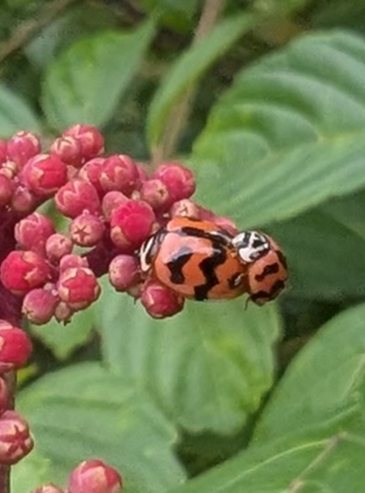
Since 10 March 2026, the microforest project has incorporated a citizen science component through the iNaturalist app which is free to use. The platform encourages visitors to participate in biodiversity observations and environmental monitoring by documenting the plants, animals and other organisms they encounter, and uploading it onto the app. The initiative has since recorded 65 observations across 46 species within the CDL MicroForest, demonstrating promising early participation and biodiversity presence.
Environmental DNA (eDNA) sampling conducted to assess soil health and biodiversity detected approximately 70% greater species richness within the microforest compared with another grass patch outside the microforest Species detected include ecologically important and bioindicator organisms which reflect the presence of varied microhabitats and soil conditions within the developing microforest ecosystem:
- Millipedes typically occur in moist, shaded leaf litter and decaying organic matter where they contribute to nutrient cycling.
- Springtails thrive in moist soils that are rich in organic material and are highly sensitive indicators of soil quality.
Office of the President, NUSJoint-Appointments:
NUS College
NUS Cities – College of Design & Engineering (CDE)
Engineering Design & Innovation Centre (EDIC-CDE)
Director, Regenerative Agritech Centre, Biological Sciences, Faculty of Science
Deputy Director, Centre for Nature-based Climate Solutions, NUS
Read about the launch event, and the first anniversary of CDL MicroForest with first-year data here.
Check out news coverage here: